Nonprofit Strategy and Planning for Nonprofit Boards
Why Nonprofit Strategic Planning Matters
One of the board’s primary responsibilities is to set direction for the organization through strategic planning.
A strategic plan or framework serves as a roadmap and as a tool for assessing progress. Working side-by-side with staff leadership, the board should play an active and substantive role in developing, approving, and supporting the organization’s strategic planning.
Strategic planning is critical for nonprofit boards for a few key reasons:
It keeps the mission front and center. Nonprofits can drift into reactive mode—chasing grants, responding to crises, saying yes to whatever funding shows up. A strategic plan forces the board to keep asking “does this serve our actual purpose?”
It aligns the board and staff. Without a shared plan, board members and staff can end up pulling in different directions, each with their own idea of what “success” looks like. A plan creates a common reference point for decisions.
It improves resource allocation. Nonprofits usually operate with limited money, staff, and volunteer time. Strategic planning helps prioritize where those scarce resources go instead of spreading them thin across too many initiatives.
It builds accountability. A plan with clear goals and timelines gives the board something concrete to measure progress against—useful in board meetings, annual reports, and conversations with funders.
It strengthens fundraising and credibility. Community members, funders and major donors often want to see that an organization has a clear direction. A strategic plan signals stability and intentionality, which builds trust.
It prepares the organization for change. Leadership transitions, funding shifts, community needs evolving—having a plan (and a regular process for revisiting it) makes the board more resilient when circumstances change.
What Is a Strategic Plan for a Nonprofit?
BoardSource has seen a shift away from traditional strategic plans based on three- to five-year time horizons and long planning processes. There has been a move toward flexible strategic frameworks articulating organizational priorities, business plans that combine programmatic and operational goals with financial forecasts, as well as more robust annual plans with clear metrics and timelines. Plans should be adaptable and reviewed regularly.
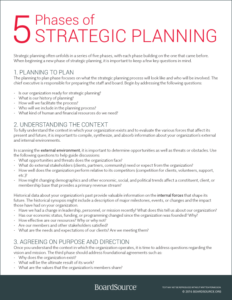
Whether the path is more traditional or a new framework, the most important planning tool a nonprofit has is the strategic planning process. This should reflect a shared board and staff vision of the organization’s role, values, and priorities. It should also include a clear focus on organizational purpose and community needs.
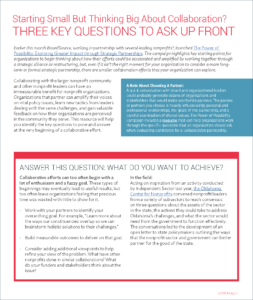
As strategic priorities are clarified, working with other actors in the ecosystem might accelerate impact. A strategic alliance with another organization can unlock new opportunities and innovations.
The Board’s Role in Nonprofit Strategic Planning
The board’s role is to set direction, provide input, and ultimately approve the final plan. The board works in close partnership with the chief executive, contributes to the strategy development, and owns the final strategic plan. Board membersare encouraged to incorporate a Purpose-Driven Board Leadership lens to guide their strategic planning process. Centering the strategic plan around the organization’s purpose helps set direction and define goals. While this centers around the four principles, in particular, equity mindset and authorized voice and power, can drive the change that most organizations need to take board leadership and thinking to new heights. It’s essential for organizations to actively listen to and elevate the voices of the communities they serve—doing so helps dismantle systemic inequities and drives greater social impact.
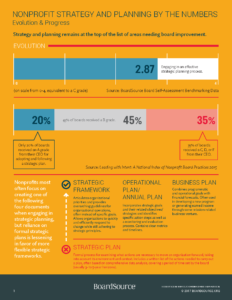
According to Leading with Intent, strategic planning remains among the top areas in need of board improvement.
Frequently Asked Questions About Nonprofit Strategic Planning
A nonprofit strategic plan is a roadmap that defines organizational direction, priorities, and goals. It reflects a shared board and staff vision of the organization’s role, values, and priorities, with a clear focus on the purpose of the organization and the community it serves.
While every organization is different, BoardSource has seen effective plans move away from rigid three- to five-year documents toward strategic frameworks that articulate organizational priorities, combine programmatic and operational goals with financial forecasts, and include clear metrics and timelines. Plans should be adaptable and reviewed regularly.
A SWOT analysis is a tool sometimes used during the strategic planning process to assess an organization’s Strengths, Weaknesses, Opportunities, and Threats. It helps boards and staff understand the internal and external environment before setting priorities and direction.
Nonprofit Strategic Planning Resources
The following resources are designed to help boards improve their performance in the area of strategic planning. According to Leading with Intent, strategic planning remains among the top areas in need of board improvement.
Quick Access:
Visual & Written Info
Guides, tools, templates, and infographics
Publications: books and toolkits
Written resources: 101, 201, and 301-level
Sign-up to receive our communications; we’re always adding new resources and will send them to you directly.
Guides, Tools, Templates, and Infographics

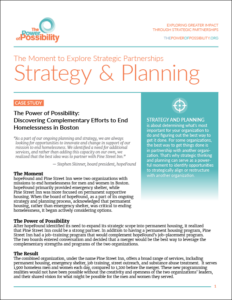
The Power of Possibility campaign resource: Using the moment of strategy and planning to consider a strategic partnership.